<?xml version="1.0" encoding="utf-8"?><feed xmlns="http://www.w3.org/2005/Atom" ><generator uri="https://jekyllrb.com/" version="3.10.0">Jekyll</generator><link href="https://adamzolyak.com/feed.xml" rel="self" type="application/atom+xml" /><link href="https://adamzolyak.com/" rel="alternate" type="text/html" /><updated>2026-03-02T17:51:40+00:00</updated><id>https://adamzolyak.com/feed.xml</id><title type="html">Meet Adam Zolyak</title><subtitle>Learn about Adam and his work.</subtitle><author><name>Adam Zolyak</name><email></email></author><entry><title type="html">I Am A Feedback Monster</title><link href="https://adamzolyak.com/i-hate-long-feedback-cycle/" rel="alternate" type="text/html" title="I Am A Feedback Monster" /><published>2025-06-27T00:00:00+00:00</published><updated>2025-06-27T00:00:00+00:00</updated><id>https://adamzolyak.com/i-hate-long-feedback-cycle</id><content type="html" xml:base="https://adamzolyak.com/i-hate-long-feedback-cycle/"><![CDATA[<p>I crave feedback. I want to know if I’m having a positive impact. I want to know if I’m helpful. More feedback? Yes please! Give it to me! More! More!</p>

<p>Perhaps that’s why I love <a href="https://highliftstudio.com">making software</a>. I write some code. I save it. And I immediately see the results and get feedback from 100s of tests. Or I share the change with a few users to get quick feedback. When I’m making software, these types of feedback are a signal that helps me find a path forward. Did the code I write compile? Does the interface work like I wanted it to work? One of the reasons I love making software is because it often produces a flow state for me.</p>

<p>Flow is characterized by a state timelessness, being fully immersed and engaged in an activity. Flow, often referred to as “flow state,” is a psychological concept describing a mental state in which a person is fully immersed and engaged in an activity. This state is characterized by a feeling of energized focus, full involvement, and enjoyment in the process of the activity. Essentially, when in a flow state, individuals lose their sense of time and are absorbed in the task at hand, often leading to high levels of creativity, accomplishment, and fulfillment. A key ingredient for flow is feedback which provides immediate and clear information about one’s performance during an activity. Without this feedback, it’s easy to start doubting oneself and one’s work.</p>

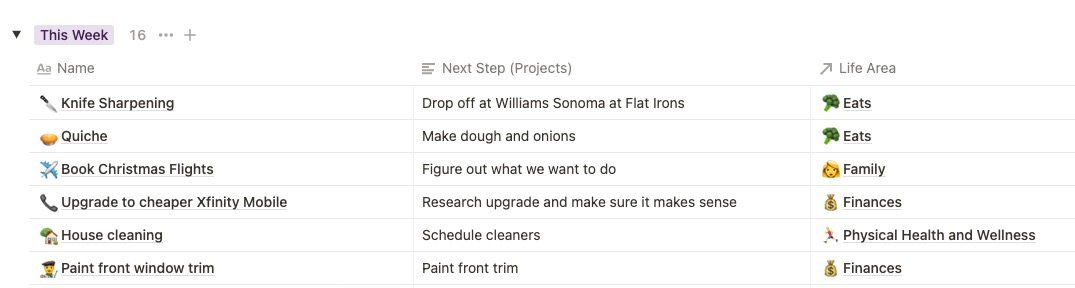
<p>I happen to be a flow junkie. I admit it. More flow? Yes please! <strong>But I’ve found a tricky problem. Often there are many types of doing in the world that don’t have immediate feedback cycles.</strong> Over the years, I’ve often found myself writing or speaking in an attempt to share useful ideas and wisdom with other people. I appreciate people who’ve helped me by sharing and I want to do the same in return. I want to be a helpful human. Sometimes I receive feedback immediately after a talk in the form of a question or someone coming up to me afterward. Or perhaps at the end of having coffee with someone I receive feedback in the form of an appreciation about what was helpful about something we talked about. <strong>But often that feedback is delayed by months or even years.</strong></p>

<p><strong>One of the tricky parts about trying to be helpful to other people is that those other people need time and space to put ideas into action.</strong> Perhaps someone hears an idea during a talk I gave. Perhaps they write it down or store it in a corner of their brain. And perhaps they immediately put it into action. Or perhaps more likely, the idea sits around for a while before being put into action. And once put into action, there’s the often circuitous journey of trying the idea, developing a point of view about it. And perhaps someday that person will share their story and feedback with me. Or perhaps I’ll never get feedback about it.</p>

<p>There’s a story that illustrates this so well. A few years ago I gave a talk called Continuous Delivery Will Make or Break Your Product. It was about the importance of product managers focusing on shipping small incremental experiments so that they could have more opportunities to get feedback from users and iterate. The talk was well attended and there were many questions. So many questions that we all eventually had to be kicked out of the meeting space so that the next talk could start. I talked with a few of the attendees afterwards and then we all parted ways. Did I change the lives and working practices of those who attended? Who knows, I figured. Change takes time. And the ideas I shared that day could take weeks or months or years to try. And then one day a few years later I was at a happy hour where one of the people who attended that talk recognized me. He came up to me and introduced himself. And he shared how impactful the talk had been to him. Not only did he try some of the ideas I shared but he said he decided to become a product manager because of the talk. Wow. I was amazed. What amazing feedback. It sounded like something I shared was helpful and impactful. It made me feel really good.</p>

<p><strong>Often that’s how feedback goes. We share ideas, encouragement, etc with the people around us in our lives and our work. And sometimes we see the immediate impacts. But often that feedback is delayed or we never see it.</strong> Sure there are ways to get more feedback. But in the end, we’ll still never learn about a lot of that feedback. This truth has helped me to trust in trying to be helpful and trusting that a few things out of all the things will be helpful. I may not know about the impact I’ve had. Or I may learn about the impact years later. And that’s ok. Because I just want to be helpful. <strong>While the feedback monster in me wants all the feedback I’ve also learned to trust the process. Trust the process of being helpful. And trust that I will be.</strong></p>

<p><em>P.S. I created High Lift Studio to <a href="https://highliftstudio.com">help great ideas find their way into the world</a> while getting fast feedback to learn and iterate along the way. Do you have a great idea you want to bring to life? Let’s chat.</em></p>

<p>-Adam</p>]]></content><author><name>Adam Zolyak</name></author><summary type="html"><![CDATA[I crave feedback. I want to know if I'm having a positive impact. I want to know if I'm helpful. More feedback? Yes please! Give it to me! More! More!]]></summary><media:thumbnail xmlns:media="http://search.yahoo.com/mrss/" url="https://adamzolyak.com/assets/images/pexels-prateekkatyal-2694434.jpg" /><media:content medium="image" url="https://adamzolyak.com/assets/images/pexels-prateekkatyal-2694434.jpg" xmlns:media="http://search.yahoo.com/mrss/" /></entry><entry><title type="html">The first commit is the hardest</title><link href="https://adamzolyak.com/the-first-commit-is-the-hardest/" rel="alternate" type="text/html" title="The first commit is the hardest" /><published>2024-03-14T00:00:00+00:00</published><updated>2024-03-14T00:00:00+00:00</updated><id>https://adamzolyak.com/the-first-commit-is-the-hardest</id><content type="html" xml:base="https://adamzolyak.com/the-first-commit-is-the-hardest/"><![CDATA[<p>
  I am a maker at my core. I make as my work and as my art. Over the years I've made websites,
  services, and apps. I've made stickers, clothing, and luggage. I've made friendships and
  partnerships. I've made adventures and memories. I love the process of making. The process of
  seeing a need in the world. The process of turning that spark of an idea into a plan for something
  I want to make. The process of making it and the endless hours of enjoyable flow found in making
  it, refining it, trying it, and iterating on it some more. And the process of putting it into the
  world, sharing it with other people to get their reactions and iterate based on their input. I'm
  fairly confident that if I filled the rest of my life with making I'd be happy and fulfilled. And
  yet it's often hard for me to start making. I am easily lulled into the distraction of an easy but
  unwelcome chore or distraction instead of making what I love.
</p>
<p>
  How could it be hard to start something that brings me such joy? It can be hard to make things and
  put them into the world. Making can involve working on something previous and important. And
  indeed the very act of achieving flow involves sufficient challenge that pushes the boundaries of
  one's attention and capacity. There are often moments of ambiguity and doubt along the way. There
  are often many hours of long work and of rework. Perhaps its the source the cliche of an artist as
  a tortured soul. Making isn't always enjoyable. And yet there's the beautiful promise of the joy
  of making. And so as I've done countless times before, I push on and start making. I trust that
  I'll find the joy I'm seeking once I start. I have the grit to move forward born from trust in my
  past experience. Pushing through doesn't always work, but it often does. And a bit of
  inspirational music often helps too.
</p>
<p>
  As I'm often making in the form of software, I've come to call this "just make the first commit".
  In software development, a commit is saving a increment of coding progress. It's an increment of
  moving forward. And I find that once I make the first commit, I'm normally sucked into the
  flywheel of flow and can make for hours. But the first commit is the hardest. And so I make the
  first commit even if I don't feel like it. I make the first commit even if I don't want to.
  Because I have faith and trust that if I trust the process the rest will follow. Some people might
  call this "trusting the process", trusting that doing the work will lead to the desired outcome. I
  trust that if I do the hard thing now, that I'll shortly have that joy I'm seeking. And so I make
  the first commit. I'm committed to it.
</p>
<figure class="kg-card kg-image-card kg-card-hascaption">
  <img
    src="/assets/images/image.png"
    class="kg-image"
    alt
    loading="lazy"
    width="771"
    height="224"
    srcset="/assets/images/size/w600/2024/03/image.png 600w, /assets/images/image.png 771w"
    sizes="(min-width: 720px) 720px"
  />
  <figcaption>
    My GitHub commits from the past year. My goals is to have at least 1 commit most days.
  </figcaption>
</figure>
<p>-Adam</p>]]></content><author><name>Adam Zolyak</name></author><category term="spacious-work" /><summary type="html"><![CDATA[I am a maker at my core. I make as my work and as my art. Over the years I've made websites, services, and apps. I've made stickers, clothing, and luggage. I've made friendships and partnerships. I've]]></summary><media:thumbnail xmlns:media="http://search.yahoo.com/mrss/" url="https://images.unsplash.com/photo-1570215171323-4ec328f3f5fa?crop=entropy&amp;cs=tinysrgb&amp;fit=max&amp;fm=jpg&amp;ixid=M3wxMTc3M3wwfDF8c2VhcmNofDR8fHNvZnR3YXJlfGVufDB8fHx8MTcxMDQzMDY0NHww&amp;ixlib=rb-4.0.3&amp;q=80&amp;w=2000" /><media:content medium="image" url="https://images.unsplash.com/photo-1570215171323-4ec328f3f5fa?crop=entropy&amp;cs=tinysrgb&amp;fit=max&amp;fm=jpg&amp;ixid=M3wxMTc3M3wwfDF8c2VhcmNofDR8fHNvZnR3YXJlfGVufDB8fHx8MTcxMDQzMDY0NHww&amp;ixlib=rb-4.0.3&amp;q=80&amp;w=2000" xmlns:media="http://search.yahoo.com/mrss/" /></entry><entry><title type="html">A placeholder for a conversation</title><link href="https://adamzolyak.com/everything-in-real-time/" rel="alternate" type="text/html" title="A placeholder for a conversation" /><published>2024-01-11T00:00:00+00:00</published><updated>2024-01-11T00:00:00+00:00</updated><id>https://adamzolyak.com/everything-in-real-time</id><content type="html" xml:base="https://adamzolyak.com/everything-in-real-time/"><![CDATA[<p>
  Agile ways of working have become so commonplace these days that I don't think we even refer to
  them as "agile" anymore. Rather it's just how we work. Over the past 10 years, I have seen this
  transition firsthand from having to get buy-in to even try agile practices to people not even
  asking about agile practices when interviewing because "it's just the way we work". But I think
  along the way we've also forgotten some of the basic ideas that made agile ways of working highly
  simple, effective, and fulfilling. Take for example the idea of a card (or perhaps a user story as
  you might know it).
</p>
<p>
  What is a card? A card is a placeholder for an increment of value often expressed in the format of
  a user story. We could debate the pros and cons of the user story format, but let's use it for
  this example. For my current work at <a href="https://www.dealkit.com/">Dealkit</a>, a card might
  look like
  <em
    >"WHEN I'm done negotiating I WANT to be able to sign all documents at once SO THAT I can get
    this deal closed."</em
  >
  My team and I might add some acceptance criteria. We might add some designs. We might add some
  test cases that we'll use to write automated tests and accept the story. But in the beginning,
  before work starts on the card it's just a card. It's just a title with perhaps a few rough ideas.
  And perhaps an estimate.
</p>
<p>
  At Dealkit, we've recently been starting most of these activities on a card when pulling it. Of
  course, we're a team of 3 people so that's perhaps easier than working in an organization of 100
  people. But still, we start figuring it out when we pull the card. As I learned long ago, a card
  is just "a placeholder for a conversation." When we pull a card, we start a conversation to figure
  out the details. We figure out the acceptance criteria. We figure out how this might fit into the
  bigger picture. We sketch a rough design. We start implementing it. We demo what we're
  implementing to each other and share feedback and suggestions. We iterate, test, and ship it a few
  days later. Then we show it to a few users. Then we iterate some more if needed creating another
  card.
</p>
<p>
  This is arguably a fairly simple but effective approach but I bet you might already have a few
  objections to it. What about the lead time to conduct research, create designs, and validate
  everything along the way? Sure you could do that. But why not just start the next most valuable
  thing and figure it out along the way? Why not build an architecture and organization that's
  optimized for being able to work in that way? It certainly has fewer dependencies and is more
  fulfilling for me as part of the team doing that work. The decisions we make are based on the most
  real-time version of reality. And it can still be transparent to the organization. We update cards
  along the way with designs and notes. We record and share Loom demos. You can always check the
  card for the most up-to-date information or ask a question.
</p>
<p>
  I think part of the aversion to working in this way of pulling a card and then figuring it out is
  an aversion to being uncomfortable. It's a common trait of human nature to want a feeling of
  certainty. Pulling a card and figuring out the design and implementation in real-time can be
  challenging and uncomfortable, especially when paired with having to collaborate and align with
  other human beings. Perhaps doing upfront research and design and refinement produce a better
  product. But I think part of the impetus for those activities is trying to bring back the feeling
  of security we find as humans in big upfront planning and design.
</p>
<p>
  Upfront design and planning activities can help us feel like we're in control when we're really
  just throwing spaghetti at the wall. It's not that those activities aren't valuable. I still find
  it helpful to at least create rough sketches for a large body of work (a feature, epic, etc)
  before diving into the details. But if we are honest and zoom out there are a lot of other factors
  that will determine the success of a business. Things like product market fit, customer
  acquisition and activation, pricing, packaging, serendipity, and a good bit of timing and luck. So
  while I want to be part of creating a helpful product that users love I also want to be part of
  shipping things into the real world so that we can get feedback and iterate based on what we're
  learning in the real systems of the real world. And so for now I love having cards that are just
  "a placeholder for a conversation."
</p>
<p>Wishing you spacious work,</p>
<p>-Adam</p>
<p>
  <em
    >This post is part of my <a href="__GHOST_URL__/tag/spacious-work/">Spacious Work series</a>,
    exploring mindsets and practices for more humane, enjoyable, and fulfilling ways of working. If
    you enjoyed this post, consider <a href="#/portal/signup">subscribing</a> to be notified about
    future posts, and letting me know what you found helpful in the comments.</em
  >
</p>]]></content><author><name>Adam Zolyak</name></author><category term="spacious-work" /><summary type="html"><![CDATA[How do planning, research, and design work with teams working in an agile sprint-based process? What is the right balance of upfront planning and design vs figuring it out along the way?]]></summary><media:thumbnail xmlns:media="http://search.yahoo.com/mrss/" url="https://images.unsplash.com/photo-1598520106804-d05d4a743915?crop=entropy&amp;cs=tinysrgb&amp;fit=max&amp;fm=jpg&amp;ixid=M3wxMTc3M3wwfDF8c2VhcmNofDV8fHdoaXRlYm9hcmRpbmd8ZW58MHx8fHwxNzA0OTkwMjI1fDA&amp;ixlib=rb-4.0.3&amp;q=80&amp;w=2000" /><media:content medium="image" url="https://images.unsplash.com/photo-1598520106804-d05d4a743915?crop=entropy&amp;cs=tinysrgb&amp;fit=max&amp;fm=jpg&amp;ixid=M3wxMTc3M3wwfDF8c2VhcmNofDV8fHdoaXRlYm9hcmRpbmd8ZW58MHx8fHwxNzA0OTkwMjI1fDA&amp;ixlib=rb-4.0.3&amp;q=80&amp;w=2000" xmlns:media="http://search.yahoo.com/mrss/" /></entry><entry><title type="html">Thinking In Analogies</title><link href="https://adamzolyak.com/thinking-in-ananalogiies/" rel="alternate" type="text/html" title="Thinking In Analogies" /><published>2023-03-15T00:00:00+00:00</published><updated>2023-03-15T00:00:00+00:00</updated><id>https://adamzolyak.com/thinking-in-ananalogiies</id><content type="html" xml:base="https://adamzolyak.com/thinking-in-ananalogiies/"><![CDATA[<p>How is software development like cooking? When cooking, it can be helpful to review the recipe steps before cooking to get a clear mental model of what you're about to do. When coding, it can be helpful to write pseudo code or tests before coding to get a clear mental model of what you're about to do.</p><p>How is it not like cooking? When cooking, I likely need to use different pots to cook different ingredients even if I'm using a similar cooking technique such as sauteing. For example, boiling potatoes or sauteing carrots. However when coding, I can write a single function that can do two different things based on the inputs. But depending on the programming language, a function still may only be called in parallel with one call happening before the other. I guess this is similar to reusing a pot, first boiling potatoes and then sauteing carrots. </p><p>These are examples of thinking in analogies. And when pursuing a new creative project or overcoming a problem, thinking in analogies can be a beneficial strategy. Analogies enable parallel thinking, enabling the transfer of experience and expertise from one domain into another. Humans excel at finding relationships between seemingly unrelated ideas. And comparing one analogy to another can be a great practical exercise to spark this type of thinking to create new options and ideas.</p><p>I was recently reminded of the power of this practice when reading <a href="https://davidepstein.com/the-range/">Range</a>. In an example of testing the problem-solving skills of students:</p><blockquote>"The students prompted with one analogy came up with more strategies than those given no analogies, and students given multiple analogies came up with more strategies than those reminded only of one. And the more distant the analogy, the better it was for idea generation." (David Epstein, Range)</blockquote><p>So next time you're stuck on a problem, consider how it's like a chicken, a rock, or a galaxy. </p>]]></content><author><name>Adam Zolyak</name></author><category term="ideas" /><summary type="html"><![CDATA[When pursuing a new creative project or overcoming a problem, thinking in analogies can be a beneficial strategy. Analogies enable parallel thinking, enabling the transfer of experience and expertise from one domain into another.]]></summary><media:thumbnail xmlns:media="http://search.yahoo.com/mrss/" url="https://adamzolyak.com/assets/images/ConnectedThoughts.png" /><media:content medium="image" url="https://adamzolyak.com/assets/images/ConnectedThoughts.png" xmlns:media="http://search.yahoo.com/mrss/" /></entry><entry><title type="html">Bringing Proven Ideas to Life</title><link href="https://adamzolyak.com/giving-life-to-old-ideas/" rel="alternate" type="text/html" title="Bringing Proven Ideas to Life" /><published>2022-11-28T00:00:00+00:00</published><updated>2022-11-28T00:00:00+00:00</updated><id>https://adamzolyak.com/giving-life-to-old-ideas</id><content type="html" xml:base="https://adamzolyak.com/giving-life-to-old-ideas/"><![CDATA[<p>We live in a world where information is no longer scarce. In fact, it's the opposite. We're bombarded with information day in and day out. I'd argue what's become scarce is applying the information in helpful ways. Putting that information into practice rather than endlessly consuming soo much information that we no longer have time for any action. For example, there are 1000s of people dispensing suggestions for how to have more meaningful work or how to live a more fulfilling life. But what does that information matter unless it's put into action? This challenge was one of my core motivations in founding <a href="https://toolsforhumanity.io/">Tools for Humanity</a> to create digital tools based on proven ideas. The ideas aren't novel. The technology probably even doesn't need to be novel. What's novel is using technology to bring those ideas to life, making them come alive in people's lives. Helping people to try new practices, form helpful habits, and have a positive impact on one's work and life is what's novel. </p><p>When reading <a href="https://davidepstein.com/the-range/">Range</a> today, I came across this story from Nintendo's history:</p><blockquote>"With that, and Drive Game, in mind, Yokoi embarked on an approach he called “lateral thinking with withered technology.” Lateral thinking is a term coined in the 1960s for the reimagining of information in new contexts, including the drawing together of seemingly disparate concepts or domains that can give old ideas new uses. By “withered technology,” Yokoi meant tech that was old enough to be extremely well understood and easily available, so it didn’t require a specialist’s knowledge. The heart of his philosophy was putting cheap, simple technology to use in ways no one else considered." (David Epstein, Range)</blockquote><p>What's scarce today is taking the wise information and experiences of the past and bringing them to life. I love this reminder that Nintendo's success was based on the combination of existing ideas and existing technology to make something novel and helpful. Sure there's still opportunity for new ideas as well. But how much impact could we have by just bringing existing helpful information to life using practical means instead of consuming yet another new idea? </p>]]></content><author><name>Adam Zolyak</name></author><category term="ideas" /><category term="tools-for-humanity" /><summary type="html"><![CDATA[We're bombarded with information day in and day out. But how much impact could we have by just bringing existing helpful information to life using practical means instead of consuming yet another new idea?]]></summary><media:thumbnail xmlns:media="http://search.yahoo.com/mrss/" url="https://adamzolyak.com/assets/images/LightbulbPlant.png" /><media:content medium="image" url="https://adamzolyak.com/assets/images/LightbulbPlant.png" xmlns:media="http://search.yahoo.com/mrss/" /></entry><entry><title type="html">What’s the next most important step you can take?</title><link href="https://adamzolyak.com/do-you-know-the-next-step/" rel="alternate" type="text/html" title="What’s the next most important step you can take?" /><published>2022-09-29T00:00:00+00:00</published><updated>2022-09-29T00:00:00+00:00</updated><id>https://adamzolyak.com/do-you-know-the-next-step</id><content type="html" xml:base="https://adamzolyak.com/do-you-know-the-next-step/"><![CDATA[<p>I've previously written about my philosophy of <a href="__GHOST_URL__/on-taking-the-next-step/">biasing to taking the next step</a>. But there's also a much more pragmatic version of this idea. That one of the most effective ways to make it easier and more likely to make progress toward a project, habit, or goal is to know the next step and keep it visible. Perhaps you've heard the in the popular saying <em>"A journey of a thousand miles begins with a single step"</em>. Indeed, making progress on a project, habit, or a goal is nothing more than a series of steps. And while figuring out and taking 100s or 1000s of steps might seem daunting, it's much more approachable to answer <strong>"what's the next most valuable step I can take to make progress?"</strong></p><p>There are many practical ways of doing this. Checklists and to-do lists are probably one of the most popular approaches. Making a list of the next steps can certainly help provide clarity. But checklists can also become overwhelming as they grow in size. They become so big we don't want to look at them. Or they become buried and forgotten about in a tool or notebook. And so I've decided to try a new experiment to keep these todos at the top of my attention. Instead of comprehensive todo lists, I'm only focusing on <strong>Next Steps</strong>.</p><p>I've had many iterations of my personal productivity system for maintaining balance in my life, practicing my habits, supporting my friends and family, and making progress on my goals and vision. My current system lives in Notion. And within my system, my Daily Dashboard is the heartbeat of my system. It's the page I visit first thing in the morning and throughout my day to stay focused and make progress. Specifically, I have a section for Projects where I've recently added a Next Step field for each project. </p><p>As part of my Daily Dashboard check-ins, I can quickly scan the list of projects asking myself <strong>"which of these next steps can I make progress on right now? Or sometime today?"</strong> This approach is much easier for me than it would be to open up each project, review its todlist, and consider the next todo. Rather I can scan the list of Next Steps, quickly saying yes or no to each one.</p><figure class="kg-card kg-image-card"><img src="/assets/images/image-4.png" class="kg-image" alt loading="lazy" width="1075" height="288" srcset="/assets/images/size/w600/2022/09/image-4.png 600w, /assets/images/size/w1000/2022/09/image-4.png 1000w, /assets/images/image-4.png 1075w" sizes="(min-width: 720px) 720px"></figure><p>While it might seem like a simple change, making it more visible and only having one Next Step per project makes all the difference for me. It's much quicker and more approachable. Indeed, I've found myself making progress on my Next Steps more frequently since starting this experiment. It's amazing how such a simple change to one's system can have such a big impact. But as James Clear observes in <a href="https://jamesclear.com/atomic-habits">Atomic Habits</a>, <em>"The central idea is to create an environment where doing the right thing is as easy as possible. Much of the battle of building better habits comes down to finding ways to reduce the friction associated with our good habits and increase the friction associated with our bad ones." (James Clear, Atomic Habits)"</em></p><p>What's something you can change in your system to make it more helpful to you? </p><p>-Adam</p>]]></content><author><name>Adam Zolyak</name></author><category term="spacious-work" /><summary type="html"><![CDATA[Exploring the power of identifying the next most valuable step you can take for each of your projects.]]></summary><media:thumbnail xmlns:media="http://search.yahoo.com/mrss/" url="https://adamzolyak.com/assets/images/noun-shoe-1009091.png" /><media:content medium="image" url="https://adamzolyak.com/assets/images/noun-shoe-1009091.png" xmlns:media="http://search.yahoo.com/mrss/" /></entry><entry><title type="html">Taking Control Of Your Time And Attention</title><link href="https://adamzolyak.com/taking-control-of-your-time-and-attention/" rel="alternate" type="text/html" title="Taking Control Of Your Time And Attention" /><published>2022-07-14T00:00:00+00:00</published><updated>2022-07-14T00:00:00+00:00</updated><id>https://adamzolyak.com/taking-control-of-your-time-and-attention</id><content type="html" xml:base="https://adamzolyak.com/taking-control-of-your-time-and-attention/"><![CDATA[<p>How do you start your Monday mornings? If you’re like many people, Mondays (and most days) start with checking your email, Slack, or other tools you use to communicate and collaborate with co-workers. And for many people, a quick check turns into an hour or more of responding to messages, answering questions, providing updates, and problem-solving. For some people, this turns into “where did my day go?” These can be important activities. <strong><strong>But are they the highest-leverage activities?</strong></strong> In other words, are these the activities that you would choose to do assuming your goal is to have the most impact during the week ahead?</p><p>“Most of us live in an overstimulating environment. We are bombarded by abrasive, insistent, and often meaningless claims on our senses. To the extent that we allow our attention to be jerked around in this way, we are allowing our inner world to be created by others.” by Catherine MacCoun from <a href="https://www.amazon.com/Becoming-Alchemist-Guide-Modern-Magician-ebook/dp/B005G4W0J4">On Becoming An Alchemist</a></p><p>Attention is a resource just like time, money, etc. And like time, attention is one of our scarest resources. <strong><strong>Either we choose how to spend our attention or other people spend it for us.</strong></strong> Even though an email or Slack message may seem important, it’s up to you to decide if and when to spend your attention on it. You were hired to achieve an outcome. And therefore, it’s up to you to ask the question <strong><strong>“Is spending my attention on this going to contribute to the outcome I’m working toward?”</strong></strong></p><p>If you already ask these types of questions regularly, congratulations. You’re doing something called <strong><strong>metacognition</strong></strong>, which is awareness, understanding, and control of your thought process. You may also know this as “self-reflection” or “active thinking”. From a metacognitive view, there’s a lot happening in the above question. You’re stepping back from a potential task and considering it in the context of your overall work and objective. You’re potentially asking more questions such as “What is my goal for this week?” or “This keeps happening. Is there a way to reduce these types of requests?” You’re considering if there are alternative tasks that could be higher leverage. You’re deciding how, if, and when you’ll respond. In other words, you’re <strong><strong>taking ownership of your attention and intentionally deciding what to do with it</strong></strong>.</p><p>If you don’t ask these types of questions regularly, don’t worry - many people don’t. Metacognition is a practice that humans are very capable of doing yet it’s not a practice that’s in our nature. <strong><strong>Metacognition is something that needs to be learned and practiced</strong></strong> to develop expertise and a habit of asking these powerful questions. If you regularly practice asking these types of questions, you’ll develop an almost seamless habit over time of asking them regularly.</p><p>The trick with creating new habits is actually doing something enough to make it a habit. That’s why each Sunday morning I perform a ritual I call The Week Ahead where I reflect on the previous week and envision the week ahead. I don't necessarily make a plan, but rather I make a list of options. These options are a short list of things that seem most valuable to focus on in the upcoming week. But if I don't get to all of those things or perhaps even add a few new things during the week that's ok too. I do this in a note in my Evernote notebook. </p><p>As part of The Week Ahead ritual, I often <strong>answer a few powerful questions</strong> such as:</p><ul><li>"What's the #1 thing I want to accomplish this week?"</li><li>"What's one thing I'm going to do for myself this week"</li><li>"How can I help and support the people around me this week?"</li></ul><p>You can try this responding however you want - send yourself an email, use a Google Doc, or write in a paper journal. Over time, this weekly ritual and taking time to practice it will help you develop expertise and a habit of asking and answering powerful questions. And over time, it will help you take control of your time and attention.</p><p>The Week Ahead is also about helping you to use powerful questions beyond Monday mornings. Asking these types of questions can be applied almost anywhere - with your team, manager, and other co-workers - having dramatic effects on your effectiveness while also saving time. People often say “think outside the box” or “get creative”. <strong>Powerful questions are a structured way of thinking outside the box and unleashing your wisdom and creativity.</strong></p>]]></content><author><name>Adam Zolyak</name></author><category term="spacious-work" /><category term="tools-for-humanity" /><summary type="html"><![CDATA[Options for becoming more intentional with your time, energy, and attention.]]></summary><media:thumbnail xmlns:media="http://search.yahoo.com/mrss/" url="https://adamzolyak.com/assets/images/noun-bright-outlook-4063465.png" /><media:content medium="image" url="https://adamzolyak.com/assets/images/noun-bright-outlook-4063465.png" xmlns:media="http://search.yahoo.com/mrss/" /></entry><entry><title type="html">How many hours do you really have for work in your workday?</title><link href="https://adamzolyak.com/on-meta-work/" rel="alternate" type="text/html" title="How many hours do you really have for work in your workday?" /><published>2022-07-04T00:00:00+00:00</published><updated>2022-07-04T00:00:00+00:00</updated><id>https://adamzolyak.com/on-meta-work</id><content type="html" xml:base="https://adamzolyak.com/on-meta-work/"><![CDATA[<p>How many hours do you expect to work today? It may be less than you assume.</p><p>There are lots of different types of workdays for knowledge workers. Perhaps you work for a company. Perhaps you're a freelancer. Perhaps you work 8 hours a day, 5 days a week, most weeks of the year. Perhaps your work a few hours a day often from your van on a sunny beach. Regardless of what your work and workday look like for you, <strong>how many of your working hours do you expect to go towards being a human being?</strong></p><p>For me, I often think “I only have one meeting today. This is great - I’ll have most of my day available for getting things done”. But over time, I’ve realized that I’m often setting myself up for disappointment with that type of thinking. Sure meetings, chat, and email can chip away at my workday, but there are also hidden costs to being a human which I don’t always account for in my work regardless of the type of work I’m doing. Things like getting a snack or saying hi to a co-worker. Understanding these costs has helped me to set more realistic expectations and also have more realistic expectations towards my co-workers.​</p><p>While conducting research for a talk I gave in 2018 called <a href="https://www.slideshare.net/adamzolyak/the-makers-guide-to-staying-focused-and-getting-shit-done/48" rel="noopener noreferrer"><u>"The Maker's Guide to Staying Focused and Getting Shit Done!"</u></a>, I discovered the average knowledge worker spends about 40-80% of their workday in meetings, chat, and collaboration. But that’s a topic for another piece. What I want to talk about here is another surprising discovery, that <strong>most knowledge workers need 20-25% of their working hours just for being human</strong>.</p><p>So what makes up that 20-25%? About 10-15% of it is for being a human being - activities such as saying hi to coworkers, eating meals, getting a snack, refilling your water, going to the bathroom. And about 10% of it is for meta work - activities such as staying organized, planning your day, managing checklists, writing down notes, organizing your calendar. Of course, these percentages vary according to you, your role, your company, etc. Have you been factoring those types of activities into your workday?</p><p>My point isn't to dismay you. You are a human being and knowledge worker, likely working as part of a larger team and organization. That 25% is what it takes to be a present knowledge worker working with other humans. Together you can accomplish more than you could alone. <strong>That 25% is the cost of that possibility and hopefully, impact.</strong> It's not a bad thing in and of itself. But it can be unhelpful if you don't set your expectations accordingly. You might be setting yourself up for failure and might also be setting your co-workers up for failure as mismatches between your expectations and reality accrue into impacts to your team or your entire organization. You might also be more directly setting up your co-workers for failure if you’re evaluating their contribution based on unrealistic expectations. “Why didn't Mike get that design done today? He had 8 hours to work on it!”​</p><p><strong>For me, learning about these costs of being human has helped me reset my expectations towards myself and towards my co-workers.</strong> Perhaps another way to think about it is being a bit more humane to myself and others. Your ability to embrace these expectations depend on your job and company culture of course. <strong>But I’ve often found that it’s worth asking “where is this expectation coming from?”</strong> Often the answer to this question is that an expectation is coming not from some external source but rather from myself. As an example from my own workday, I’ve recently found myself thinking “you can’t go for a walk during the middle of your workday”. Upon exploring this, I realized it isn’t coming from a company policy or my manager. It’s just coming from my past experience and societal norms. It is me not giving myself permission to take a walk. And changing my own expectation is within my sphere of control.</p><p>Of course, you may be thinking “but I’m not in control of all the meetings and requests in my workday” and “I really do need to work 10 hours a day”. Those are real and challenging situations for many knowledge workers. But I also think there are creative options to carve out more space in many situations. So what are those options?</p><p>In part 2, I’ll explore three options for carving out more hours and space for deep-focused work and being a human. </p><p>-Adam Zolyak</p><p><em>Tremendous appreciation and high fives 🙌 to </em><a href="https://twitter.com/CarynTan29" rel="noopener noreferrer"><u><em>Caryn Tan</em></u></a><em>, </em><a href="https://twitter.com/jasonvuvu" rel="noopener noreferrer"><u><em>Jason Nguyen</em></u></a><em>, </em><a href="https://twitter.com/steven_ovadia" rel="noopener noreferrer"><u><em>Steven Ovadia</em></u></a><em>, </em><a href="https://srsmith3.substack.com/" rel="noopener noreferrer"><u><em>Russell Smith</em></u></a><em>, and </em><a href="https://twitter.com/rlope" rel="noopener noreferrer"><u><em>Rodrigo Lopez</em></u></a><em> from Foster.co for collaborating on this piece!</em></p>]]></content><author><name>Adam Zolyak</name></author><category term="spacious-work" /><summary type="html"><![CDATA[Exploring the time it takes to be human during your workday and resetting your expectations for productivity.]]></summary><media:thumbnail xmlns:media="http://search.yahoo.com/mrss/" url="https://adamzolyak.com/assets/images/noun-clocks-3652099.png" /><media:content medium="image" url="https://adamzolyak.com/assets/images/noun-clocks-3652099.png" xmlns:media="http://search.yahoo.com/mrss/" /></entry><entry><title type="html">Taking Breaks During Your Workday to Recharge</title><link href="https://adamzolyak.com/on-taking-breaks/" rel="alternate" type="text/html" title="Taking Breaks During Your Workday to Recharge" /><published>2022-07-04T00:00:00+00:00</published><updated>2022-07-04T00:00:00+00:00</updated><id>https://adamzolyak.com/on-taking-breaks</id><content type="html" xml:base="https://adamzolyak.com/on-taking-breaks/"><![CDATA[<p>“There’s a conspiracy on the lunar base?!” I think as I happily munch on some salad greens. I’m taking a break from my workday, having lunch and reading a fiction book called "The Relentless Moon". I’m having chicken salad with a side of dressed salad greens. I’m at my kitchen table, not at my desk. And this ritual is one of the most important parts of my work. But I sometimes have trouble remembering that - or rather trouble doing this ritual.</p><p>So what do I do when I don’t honor this ritual? I eat at my desk. I maybe grab some ready to go food and eat it without even noticing what it tastes like. It's probably not the healthiest, most nutritious food. But hey, I'm trying to push harder. Trying to do more. Trying to be more productive. <strong>Except that’s not really what’s happening, it’s just the story I’m telling myself</strong>.</p><p>The real story is that <strong>I’m burning myself out</strong>. I’m draining my energy and motivation without recharging it. I'm draining both my physical and mental energy.<a href="https://spaciouswork.com/posts/on-the-5-hour-workday" rel="noopener noreferrer"> <u>I’m a human. I need to eat, move, and recharge during my workday</u></a>. Eating at my desk seems efficient but it’s not effective, at least not for me. Perhaps it's not obvious that efficiency isn’t always effective. It just uses less resources, for example less time. <strong>And sometimes what I need to be more effective is to be less efficient</strong>.</p><p>During my journey of doing and forgetting this ritual, I've found that making changes to my environment can be helpful guardrails to help me take a break for lunch. For example, having food prepared in advance is helpful. For today's lunch, I prepared the chicken salad on Sunday so I could easily grab it from the fridge. The same with the dressed greens - just grab a handful and add some dressing. I also find that switching physical spaces is helpful. My office is full of potential distractions calling me to pay attention to them. My kitchen table only has a placemat to distract me. I am normally reading a fiction book which is a treat for me and recharges my energy. You might call this habit bundling. I can have a really enjoyable break.</p><p>You may be thinking I’m writing this to share my experience and wisdom with you. <strong>But I’m really writing this as a reminder to myself. Because I often forget my own wisdom. And I often don’t listen to my own wisdom.</strong> So perhaps this will help me to remember myself more often? And perhaps you’ll find some helpful wisdom too?</p><p>What are you finding helpful here? How could you apply it to your work? What's a small experiment you could try?</p><p>-Adam Zolyak</p>]]></content><author><name>Adam Zolyak</name></author><category term="spacious-work" /><summary type="html"><![CDATA[Why taking small breaks during your workday might be the secret to feeling more recharged and doing better work.]]></summary><media:thumbnail xmlns:media="http://search.yahoo.com/mrss/" url="https://adamzolyak.com/assets/images/noun-brain-melt-668402.png" /><media:content medium="image" url="https://adamzolyak.com/assets/images/noun-brain-melt-668402.png" xmlns:media="http://search.yahoo.com/mrss/" /></entry><entry><title type="html">Onward.ly - Making Self-Reflection A Habit</title><link href="https://adamzolyak.com/onward-ly/" rel="alternate" type="text/html" title="Onward.ly - Making Self-Reflection A Habit" /><published>2022-06-07T00:00:00+00:00</published><updated>2022-06-07T00:00:00+00:00</updated><id>https://adamzolyak.com/onward-ly</id><content type="html" xml:base="https://adamzolyak.com/onward-ly/"><![CDATA[<p>I started making Onward.ly in 2020 to support my own wellness rituals. It's a trusted companion and tool that I use on a daily basis.</p><p>Onward.ly is an app for making self-awareness a habit. Show up with more energy, clarity, and authenticity - at home, at work, and everywhere in between. Show up as yourself and move Onwardly. Learn more at <a href="https://www.onward.ly/">https://www.onward.ly/</a>.</p>]]></content><author><name>Adam Zolyak</name></author><category term="featured" /><category term="making" /><summary type="html"><![CDATA[Learn about my work with Onward.ly to create a tool to help people learn and practice the habit of self-awareness and self-efficacy.]]></summary><media:thumbnail xmlns:media="http://search.yahoo.com/mrss/" url="https://adamzolyak.com/assets/images/Image-2022-07-03-at-8.46.09-PM.jpg" /><media:content medium="image" url="https://adamzolyak.com/assets/images/Image-2022-07-03-at-8.46.09-PM.jpg" xmlns:media="http://search.yahoo.com/mrss/" /></entry></feed>